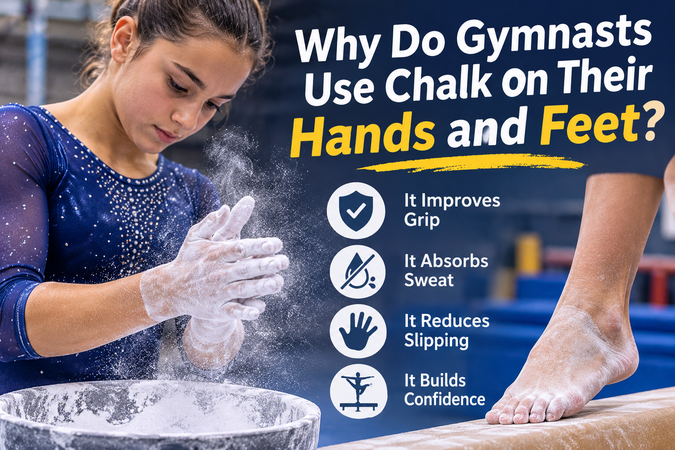
Gymnastics is a sport that demands incredible strength, balance, flexibility, coordination and precision. Whether performing breathtaking flips on the floor, swinging around the uneven bars, balancing on a beam or executing powerful movements on the rings, gymnasts need complete control over their bodies. Even the smallest slip can affect a performance.
One interesting thing you will notice when watching gymnastics is that athletes frequently apply white powder to their hands and sometimes their feet. This powder is known as gymnastics chalk, and it plays a surprisingly important role in helping gymnasts perform safely and confidently.
But why do gymnasts use chalk? Does it improve their grip? Why is it particularly important for certain gymnastics events? And why do some athletes apply it to their feet as well as their hands?
In this guide, we will explore the science behind gymnastics chalk, its benefits, the different types available, how gymnasts use it and some frequently asked questions.
1. What Is Gymnastics Chalk?
Gymnastics chalk is a special grip-enhancing powder used by athletes to reduce moisture on their skin and improve their contact with gymnastics equipment.
Most traditional gymnastics chalk is made from a substance called magnesium carbonate (MgCO₃).
It is a fine, white powder that absorbs moisture from the surface of the skin. When gymnasts apply it to their hands or feet, it helps keep them dry and reduces the slippery feeling caused by sweat.
Although it looks similar to ordinary household chalk, gymnastics chalk is chemically different from the calcium carbonate chalk commonly used on blackboards.
Its main purpose is not to mark surfaces or leave white lines. Instead, it helps athletes maintain a more reliable grip.
What is gymnastics chalk made of?
| Feature | Description |
|---|---|
| Main ingredient | Magnesium carbonate |
| Appearance | Fine white powder or solid block |
| Main purpose | Absorbing moisture |
| Common applications | Hands, fingers and sometimes feet |
| Used in | Artistic gymnastics, climbing, weightlifting and other grip-intensive sports |
| Main benefit | Helps improve grip consistency by keeping skin dry |
Some products may contain additional ingredients or use different formulations, so athletes should check the manufacturer’s product information.
2. Why Do Gymnasts Use Chalk on Their Hands?
The primary reason gymnasts apply chalk to their hands is to improve grip.
Gymnastics involves movements that require athletes to hold, support or rotate their bodies using their hands. On apparatus such as the uneven bars, high bar and rings, a secure grip is essential.
Even a small amount of sweat can make the hands slippery, increasing the possibility of losing control.
Here are the main reasons gymnasts use chalk on their hands.
A. Absorbs sweat and moisture
Gymnastics is physically demanding. Athletes perform powerful movements that require significant muscular effort, which can cause their hands to sweat.
Sweaty palms create a slippery surface between the skin and the equipment.
Magnesium carbonate absorbs moisture on the skin, helping the hands remain dry.
This is particularly useful during routines involving:
- Uneven bars.
- Horizontal bars.
- Still rings.
- Parallel bars.
- Pommel horse.
- Vault preparation and other grip-dependent movements.
By reducing surface moisture, chalk helps gymnasts maintain better contact with the apparatus.
B. Improves grip and control
Grip is one of the most important elements of gymnastics.
Imagine a gymnast swinging at speed on the high bar. Their hands must maintain contact with the bar while their body rotates and changes direction.
If their hands become sweaty, the risk of slipping increases.
Chalk helps create a more consistent contact surface between the athlete’s hands and the apparatus.
It does not act like glue or make the hands stick to the equipment. Instead, it helps prevent moisture from interfering with friction and grip.
C. Helps prevent accidental slips
A slip during gymnastics can interrupt a routine, reduce a competition score or potentially cause an injury.
For example, a gymnast performing a complex release move on the uneven bars needs confidence that their grip will remain secure before releasing and catching the bar again.
Chalk helps reduce one factor that contributes to slipping: excess moisture.
However, it cannot eliminate the risk of falls. Proper technique, physical preparation, equipment maintenance and appropriate safety measures remain essential.
D. Provides confidence during difficult routines
Gymnastics is not just a physical sport. It also requires considerable mental focus.
Athletes need confidence when attempting challenging skills, especially movements involving height, rotation and rapid changes in body position.
Knowing that their hands are dry can help gymnasts feel more comfortable when gripping the apparatus.
This confidence can make it easier to concentrate on timing, technique and body positioning rather than worrying about sweaty hands.
3. Why Do Gymnasts Use Chalk on Their Feet?
While hand chalk is commonly associated with gymnastics, some athletes also apply chalk to their feet.
This is particularly relevant to events where foot placement, balance and controlled contact with the apparatus are important.
The balance beam is a good example.
Gymnasts perform jumps, turns, handstands, leaps and acrobatic skills on a narrow beam. Their feet need to make controlled contact with its surface.
Sweaty feet can sometimes make this contact less predictable.
Here is why chalk may be applied to the feet.
A. Reduces moisture on the soles
Feet can sweat just like hands.
When the soles become damp, athletes may experience an uncomfortable or slippery sensation.
Applying a small amount of suitable gymnastics chalk can help absorb moisture and keep the skin drier.
This can be particularly helpful during training sessions and demanding routines.
B. Helps with balance beam control
The balance beam is approximately 10 centimetres wide.
Gymnasts must maintain control while performing movements that require precision and balance.
Dry feet can help provide more predictable contact with the beam.
However, chalk does not automatically increase friction on every surface. Its effect depends on the equipment material, surface texture and the amount of moisture present.
C. Helps manage sweaty feet during training
Some gymnasts naturally sweat more than others.
For athletes who experience excessive moisture on their feet, chalk may help make training more comfortable.
It can also help reduce the uncomfortable feeling of damp skin during repeated movements.
D. Supports consistent foot placement
Gymnastics requires precise foot positioning.
A gymnast performing a landing, leap or turn needs to know how their feet are contacting the surface.
Keeping the soles dry may help make that contact more consistent.
It is worth noting that not every gymnast uses chalk on their feet. Its use depends on personal preference, the event, the equipment and competition rules.
4. How Does Gymnastics Chalk Actually Work?
The science behind gymnastics chalk is relatively simple.
The main ingredient, magnesium carbonate, is a moisture-absorbing mineral.
When gymnasts rub chalk onto their hands, it helps absorb sweat and surface moisture.
This reduces the amount of water between the skin and the equipment.
Why does that matter?
Water can interfere with the friction needed to maintain a secure grip. When the skin becomes excessively damp, it may slide more easily against certain surfaces.
By reducing moisture, chalk helps create more favourable conditions for gripping.
The science of grip
Grip depends on several factors, including:
- Surface texture.
- Skin condition.
- Moisture levels.
- Contact pressure.
- Friction between the skin and equipment.
Chalk mainly helps by managing moisture rather than creating additional stickiness.
How chalk helps improve grip
Without chalk
Sweat can make the skin slippery and interfere with grip.
With chalk
Surface moisture is reduced, helping create a more consistent grip.
This is why chalk is widely used in other sports that require strong hand grip, including rock climbing, weightlifting and CrossFit.
5. Which Gymnastics Events Require Chalk the Most?
Not every gymnastics event requires the same amount of chalk.
Some disciplines involve holding equipment with the hands for extended periods, while others focus more on floor contact, balance and controlled landings.
The following table explains how chalk is used across different artistic gymnastics events.
| Gymnastics event | Chalk usage | Main reason |
|---|---|---|
| Uneven bars | Very high | Secure grip during swings and releases |
| Horizontal bar | Very high | Grip control during rotations |
| Still rings | Very high | Helps manage sweaty hands |
| Parallel bars | High | Supports consistent hand contact |
| Pommel horse | High | Helps maintain dry hands |
| Balance beam | Variable | May be used on hands or feet |
| Floor exercise | Usually limited | Less reliance on sustained hand grip |
| Vault | Variable | Depends on athlete and technique |
Uneven bars
Uneven bars are one of the events where chalk is particularly important.
Gymnasts perform swings, rotations, handstands and release-and-catch movements while holding the bars.
Their hands must maintain a reliable grip throughout these demanding movements.
Horizontal bar
The horizontal bar requires tremendous upper-body strength and grip control.
Gymnasts perform giant swings, turns, release moves and complex combinations.
Chalk helps keep the hands dry and supports consistent contact with the bar.
Still rings
The rings require exceptional strength and stability.
Athletes must support their body weight while performing static strength positions and dynamic movements.
Chalk can help reduce moisture and improve grip consistency when holding the rings.
Balance beam
Balance beam routines involve precise footwork and controlled movements.
Some gymnasts use chalk on their feet to manage moisture and improve the consistency of contact with the beam.
However, the amount and type of chalk used depend on the athlete and the equipment.
6. Different Types of Gymnastics Chalk
Not all gymnastics chalk comes in the same form.
Although magnesium carbonate is the traditional choice, athletes can purchase it in several formats.
| Chalk type | Description | Advantages | Disadvantages |
|---|---|---|---|
| Block chalk | Solid block that breaks into powder | Easy to control application | Can crumble |
| Loose chalk | Fine powdered magnesium carbonate | Easy to spread across hands | Can create dust |
| Liquid chalk | Magnesium carbonate suspended in liquid | Less airborne powder | Requires drying time |
| Chalk balls | Powder contained in a fabric pouch | Less mess and controlled application | May require repeated application |
Block chalk
Block chalk is a traditional option used by many gymnasts.
Athletes rub their hands against the block to transfer powder onto their skin.
It is simple, affordable and easy to store.
Loose powdered chalk
Loose chalk is a finely ground powder that can be applied directly to the hands.
It is popular because athletes can cover their palms and fingers quickly.
However, it can create dust, so gyms need to manage its use carefully.
Liquid chalk
Liquid chalk is a modern alternative.
It generally contains magnesium carbonate suspended in alcohol or another liquid carrier.
Once applied, the liquid evaporates, leaving a thin layer of chalk on the skin.
It can be useful in facilities where airborne chalk dust is discouraged.
Chalk balls
Chalk balls contain powdered chalk inside a small fabric pouch.
Athletes squeeze or tap the pouch to release a controlled amount of powder.
They can help reduce mess and unnecessary chalk waste.
7. How Do Gymnasts Apply Chalk Correctly?
Using chalk effectively involves more than simply covering the hands in white powder.
Too little chalk may not absorb enough moisture, while too much can create unnecessary mess and potentially affect grip.
Here is a simple application process.
Step 1: Clean your hands
Start with clean hands to remove dirt, oils and other substances that may interfere with grip.
Step 2: Dry your hands
Use a towel to remove excess water or sweat before applying chalk.
Step 3: Apply a small amount
Rub a little chalk onto your palms and fingers.
Step 4: Spread it evenly
Make sure the areas that contact the apparatus are covered.
Step 5: Remove excess powder
Shake or brush away loose chalk to avoid excessive buildup.
Step 6: Reapply when necessary
During longer training sessions, gymnasts may need to reapply chalk if their hands become damp.
For feet, athletes should use only an appropriate product and follow their coach’s guidance and the equipment manufacturer’s recommendations.
8. Are There Any Disadvantages to Using Gymnastics Chalk?
Although gymnastics chalk offers several benefits, it is not completely without disadvantages.
Like any sports product, it should be used appropriately.
A. Dry skin
Magnesium carbonate absorbs moisture.
Frequent application can leave the skin feeling dry, particularly for athletes who train for several hours each day.
Some gymnasts may experience cracked skin or irritation.
Using an appropriate moisturiser after training can help maintain healthy skin.
B. Chalk dust
Loose chalk can become airborne when athletes apply it or clap their hands together.
Excessive dust can irritate the eyes and respiratory system.
Gyms should provide suitable ventilation and follow appropriate cleaning and chalk-use procedures.
C. Excessive chalk buildup
Using too much chalk does not necessarily improve grip.
A thick layer of powder can sometimes create an inconsistent contact surface.
Gymnasts should apply enough chalk to manage moisture without allowing unnecessary buildup.
D. Equipment cleanliness
Chalk can accumulate on gymnastics equipment, floors and surrounding surfaces.
Regular cleaning helps maintain suitable training conditions.
E. False confidence
Chalk cannot replace proper technique or training.
Even with dry hands, gymnasts can lose their grip if they use incorrect technique, fatigue, misjudge a movement or encounter equipment problems.
9. Is Gymnastics Chalk the Same as Regular Blackboard Chalk?
No. Although both products are commonly white, they are made from different materials and serve different purposes.
Traditional blackboard chalk is generally made from calcium carbonate or calcium sulphate, depending on the product.
Gymnastics chalk is usually made from magnesium carbonate.
The difference is important because gymnastics chalk is designed to absorb moisture and support grip, whereas blackboard chalk is designed to leave marks on writing surfaces.
| Comparison | Gymnastics chalk | Blackboard chalk |
|---|---|---|
| Main ingredient | Magnesium carbonate | Usually calcium carbonate or calcium sulphate |
| Primary purpose | Absorbs moisture | Writing and drawing |
| Used on | Hands and sometimes feet | Chalkboards |
| Grip support | Yes, by managing moisture | Not designed for grip |
| Suitable for gymnastics | Yes, if formulated for sport | No, not recommended |
Gymnasts should always choose chalk specifically intended for athletic use.
10. Why Do Gymnasts Sometimes Use Hand Grips Alongside Chalk?
You may notice that some gymnasts wear special leather hand grips when performing on bars.
These grips are designed to protect the hands and support grip during demanding routines.
They are particularly common in artistic gymnastics events such as the uneven bars and horizontal bar.
Hand grips and chalk serve different purposes.
- Chalk helps absorb sweat and surface moisture.
- Hand grips provide a protective layer between the hands and the apparatus.
- Wrist straps help secure certain types of hand grips.
Many gymnasts use chalk with their hand grips because the combination can improve comfort and grip consistency.
However, not all gymnasts use grips, and the equipment they choose depends on the event, their experience and personal preference.
11. Do All Gymnasts Use Chalk?
No. Although chalk is common in artistic gymnastics, not every gymnast uses it.
The decision depends on several factors:
The gymnastics discipline: Artistic gymnasts who perform on bars and rings often use chalk more frequently than athletes in disciplines with less sustained hand contact.
Personal preference: Some athletes naturally have drier hands and may need less chalk.
Sweat levels: Gymnasts who sweat heavily may benefit from applying chalk more regularly.
Equipment requirements: Certain apparatus and gym facilities have specific rules about the type and amount of chalk permitted.
Competition regulations: Athletes must follow the rules and equipment requirements of the relevant gymnastics organisation.
The goal is to use chalk when it provides a practical benefit, rather than applying it simply because other gymnasts do.
12. Frequently Asked Questions (FAQs)
Here are answers to some of the most common questions about why gymnasts use chalk on their hands and feet.
1. Why do gymnasts put white powder on their hands?
Gymnasts use white powder called gymnastics chalk, which is usually made from magnesium carbonate. It absorbs sweat and moisture from the skin, helping athletes maintain a more consistent grip on equipment such as uneven bars, rings and the horizontal bar.
2. Does gymnastics chalk make your hands sticky?
No. Gymnastics chalk does not work like glue. It absorbs surface moisture, helping keep the hands dry. This can improve grip by reducing slipperiness, but it does not make the hands sticky.
3. Why do gymnasts put chalk on their feet?
Some gymnasts apply chalk to their feet to absorb sweat and reduce moisture on their soles. This can help them maintain more predictable contact with equipment such as the balance beam.
4. Is gymnastics chalk made from magnesium?
Yes. Traditional gymnastics chalk is primarily made from magnesium carbonate (MgCO₃). This mineral is commonly used because it absorbs moisture and helps athletes maintain a dry grip.
5. Why do gymnasts clap their hands after applying chalk?
Gymnasts sometimes clap or rub their hands together to distribute chalk across their palms and fingers. They may also shake off excess powder. However, excessive clapping can release unnecessary chalk dust into the air.
6. Can gymnasts use normal blackboard chalk?
It is not recommended. Blackboard chalk is generally made from different materials and is not specifically designed for athletic grip. Gymnasts should use sports-grade magnesium carbonate chalk.
7. Does chalk prevent gymnasts from falling?
No. Chalk can help reduce slipping caused by sweaty hands, but it cannot prevent every fall. Gymnasts still need proper technique, strength, coordination, training and appropriate safety equipment.
8. Why do gymnasts use chalk on uneven bars?
Uneven bars involve continuous swinging, rotations and release moves. Gymnasts need a reliable grip to control their movements. Chalk helps absorb sweat and supports consistent contact with the bars.
9. Is liquid chalk better than powdered chalk?
Neither option is universally better. Powdered chalk is traditional and easy to apply, while liquid chalk can reduce airborne dust and provide a more controlled application. The best option depends on the athlete, facility rules and personal preference.
10. Does gymnastics chalk damage your hands?
Regular use can dry out the skin because magnesium carbonate absorbs moisture. Some athletes may develop dry or cracked skin, especially with frequent training. Proper hand care and moisturising can help.
11. How often should gymnasts apply chalk?
There is no fixed schedule. Gymnasts generally apply chalk before an event or training exercise and reapply it when their hands become damp. The amount needed depends on sweat levels, training duration and personal preference.
12. Why do gymnasts use chalk before performing?
Gymnasts apply chalk before performing to prepare their hands for contact with the apparatus. It helps manage moisture, improves grip consistency and gives athletes confidence before attempting challenging movements.
13. Can children use gymnastics chalk?
Yes. Children can use suitable sports-grade gymnastics chalk under appropriate supervision. However, it should be used in well-ventilated areas, kept away from the eyes and mouth, and handled carefully to avoid excessive dust.
14. Is gymnastics chalk waterproof?
No. Gymnastics chalk is designed to absorb moisture, not repel water. Once exposed to significant moisture, it may become less effective and need to be reapplied.
15. Why don’t gymnasts use chalk all over their bodies?
Chalk is mainly useful on areas that need reliable contact with gymnastics equipment. Applying it to the entire body would be unnecessary, create more dust and offer little practical benefit.
Conclusion: Why Is Chalk So Important in Gymnastics?
Gymnastics chalk may look like a simple white powder, but it plays an important role in helping athletes perform challenging movements with greater confidence and control.
Its main purpose is to absorb sweat and moisture, particularly from the hands, where a secure grip is essential for movements on the uneven bars, horizontal bar, parallel bars and rings.
Some gymnasts also apply chalk to their feet to manage moisture and support consistent contact with equipment such as the balance beam.
Made primarily from magnesium carbonate, gymnastics chalk helps create more favourable gripping conditions by reducing surface moisture. It does not act as glue, guarantee a stronger grip or prevent every fall, but it can make an important difference during training and competition.
Ultimately, gymnastics is a sport where precision matters. Every movement, landing and grip must be carefully controlled. Something as simple as a small amount of chalk can help athletes focus on their performance and tackle difficult skills with greater confidence.
That is why gymnastics chalk remains one of the most useful and recognisable pieces of equipment in the sport.